Landscaping & Hardscapes in Seattle
Seattle yards are rarely flat, rarely level and rarely easy — steep lots, clay that holds water, and a growing season that never quite stops. Struver works on them every week, from West Seattle to the north end.
Seattle specifics
What the city does to a yard
Four things come up on almost every Seattle property we walk. None of them show up in a generic landscaping quote.
Slopes that shed water toward the house
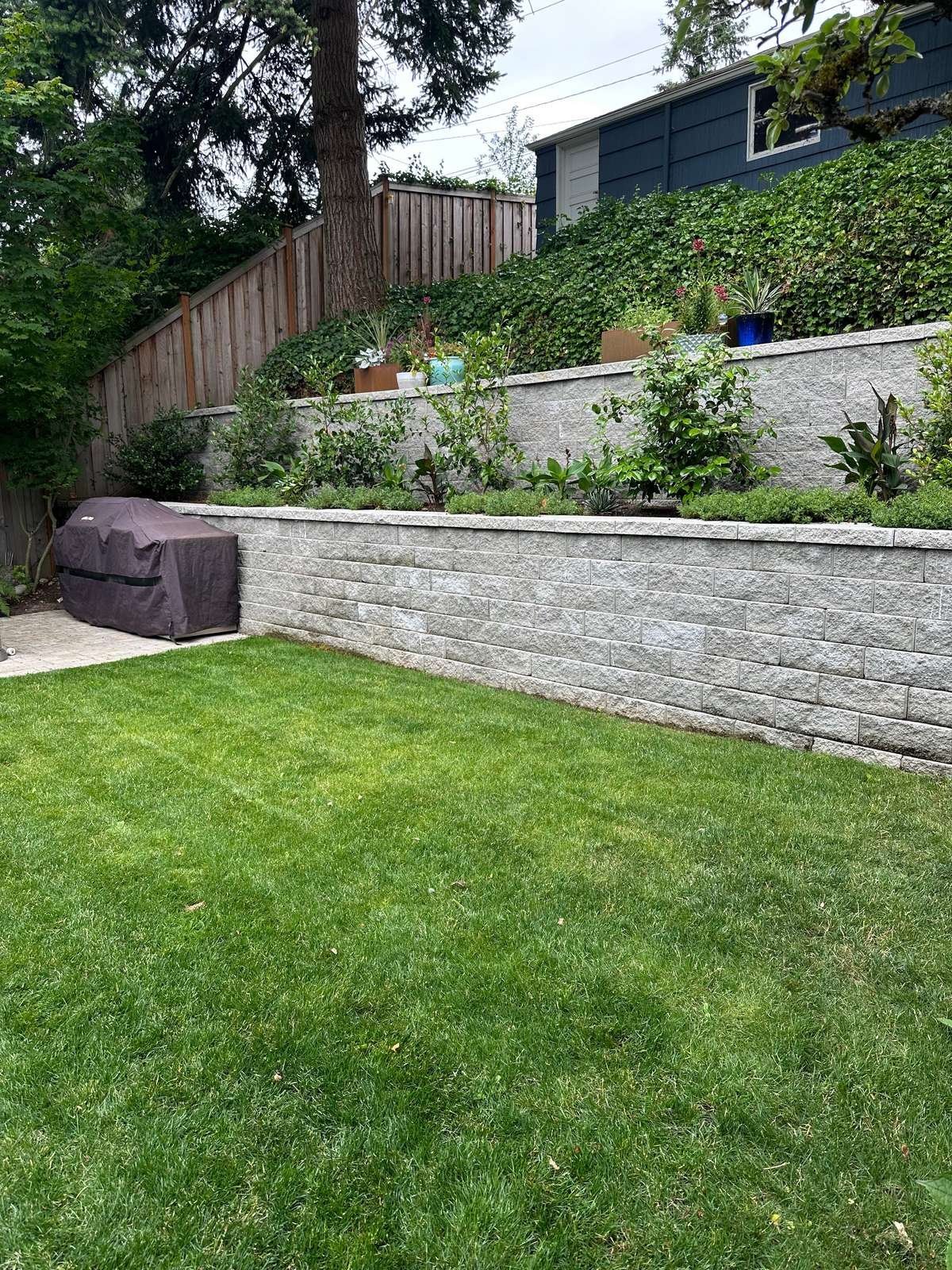
Seattle is built on and between hills, and plenty of lots drain toward the foundation rather than away from it. That is what a retaining wall is for — but only when it is graded correctly, backed with drainage aggregate and given somewhere to send the water. A wall that only holds soil back will be a wet basement in five years.
Clay soil under almost everything
Much of the city sits on glacial till and hard clay that holds water long after a dry spell ends. Planting the same species you see in drier parts of the country gives you root rot by spring. We work with what the soil actually is — adding organic matter, choosing plants that tolerate wet feet, and setting pavers on a base that will not heave.
Mature trees and their root plates
Older neighborhoods are full of mature Douglas fir, bigleaf maple and cedar, and their roots run far wider than the canopy suggests. Paths, walls and fences all have to be routed around them, not through them. We plan the layout around the roots that matter and leave the tree with a viable footing.
A growing season that never fully stops
Mild, wet winters mean hedges keep growing and moss keeps spreading while the lawn is dormant. Weekly mowing in summer is not enough here — properties need late-winter pruning, spring bed cleanup and a fall leaf-clear to stay in shape. Our maintenance schedules are built around that pattern, not a generic monthly visit.
Neighborhoods
Where we work in Seattle
We are based in Southwest Seattle, which puts the west side and the south end on our route most days, and the neighborhoods north of the ship canal inside a normal week. These are the areas we work in most often.
Every one of these neighborhoods has its own lot shapes and its own council rules for fences and retaining walls. We check before we quote rather than after.
All areas we serve- West Seattle
- White Center
- Delridge
- South Park
- Georgetown
- Beacon Hill
- Rainier Valley
- Columbia City
- Ballard
- Fremont
- Wallingford
- Queen Anne
- Magnolia
- Capitol Hill
- Laurelhurst
- Northgate
Working in the city
Tight lots, close neighbors, no room to swing a trailer
A Seattle job is usually a logistics job before it is a build. Street parking is limited, alleys are narrow, and on a lot twenty feet wide the only way material reaches the back is through the house or over the roof line. We plan access and haul-away before the first day, so the crew is not improvising while your driveway is blocked.
It also means we ask about property lines early. Seattle lots were platted long before most of the fences went up, and what looks like the boundary is often not. We check before a fence goes in rather than sorting it out after.
Permits checked before we quote
Retaining walls, decks and some fences need city approval depending on height and siting. We confirm what applies to your lot before pricing, so a permit does not appear halfway through the job.
Rental and multi-unit properties
Landlords and property managers across the city put multiple addresses on one maintenance schedule with a single point of contact and one invoice.
Clean, considerate job sites
On a close lot, the mess lands on your neighbor as much as on you. Debris is cleared daily and the staging area is set so it does not block anyone's access.
What we do here
Four services, one crew, across Seattle
Seattle questions
What homeowners ask us here
Do you work across the whole city, or just West Seattle?
The whole city. We are based in Southwest Seattle, so the west side and the south end are where our crews usually start the day, and neighborhoods north of the ship canal are inside a normal working week. If a job is on the far edge of the city we will tell you honestly what the schedule looks like rather than book it and improvise.
Can you build a retaining wall on a steep Seattle lot?
Yes — sloped ground is most of what we build on here. What matters is not just the wall but what sits behind it: drainage aggregate, a proper footing, and somewhere for the water to go. A wall holding saturated clay with no drainage will lean within a few seasons. Depending on height and siting a permit may be required, and we check that before quoting rather than mid-job.
How much does landscaping cost in Seattle?
It depends far more on access and grade than on lot size. A level lot with street parking is a different job from a steep site where material has to come through the house. We quote after walking the property, and the written estimate itemizes the work so you can see what is driving the number. Free estimates across the city.
Do you work with landlords and property managers?
Regularly. Multi-unit buildings and rental houses can go on one maintenance schedule with a single point of contact, and we can coordinate access with tenants so you are not the one fielding calls about the crew arriving.
Free estimate
Request a Free Estimate
Tell us where in Seattle the property is and roughly what needs doing. We'll come out, walk the lot and give you a clear written price — no obligation.
- Call us directly
- (206) 496-5977
- Based in
- West Seattle — working citywide
- Credentials
- Licensed · Bonded · Insured · Family-owned